
Walk into almost any professional sports complex built in the last decade and you will notice one thing very quickly: the grass looks perfect.Same colour, same height, no bare patches, no muddy goalmouth areas. That is not natural grass. That is artificial turf and it has quietly become the surface of choice for sports facilities on every continent.
Schools in the UAE train on it year-round without irrigation. Football academies in Africa hold six sessions a day without worrying about wear. Municipal leisure centres in Europe recover their installation investment within three to four years. The shift is real, it is accelerating, and this article explains exactly why it is happening.
Table of Contents
The Problem with Natural Grass on Busy Pitches
The Problem with Natural Grass on Busy Pitches
Natural grass is not designed for heavy, repetitive use. A typical community football pitch used every day will develop bare,compacted areas within weeks of the season opening.Once the turf is broken up, the surface becomes uneven, unpredictable,and potentially hazardous for players.
Maintenance adds up fast. Groundskeeping costs for a natural pitch including mowing,fertilising,irrigation,aeration, overseeding,and line marking typically run between USD 15,000 and USD 40,000 per year depending on climate and usage intensity.In arid climates like the Gulf,those figures go even higher because the irrigation demand is enormous.
Rain makes things worse. A single heavy downpour can put a natural pitch out of action for days. Tournaments get cancelled, training schedules collapse, and bookings are refunded. For any facility that runs a commercial operation, that is lost revenue with no way to recover it.
What Artificial Turf Actually Delivers
What Artificial Turf Actually Delivers
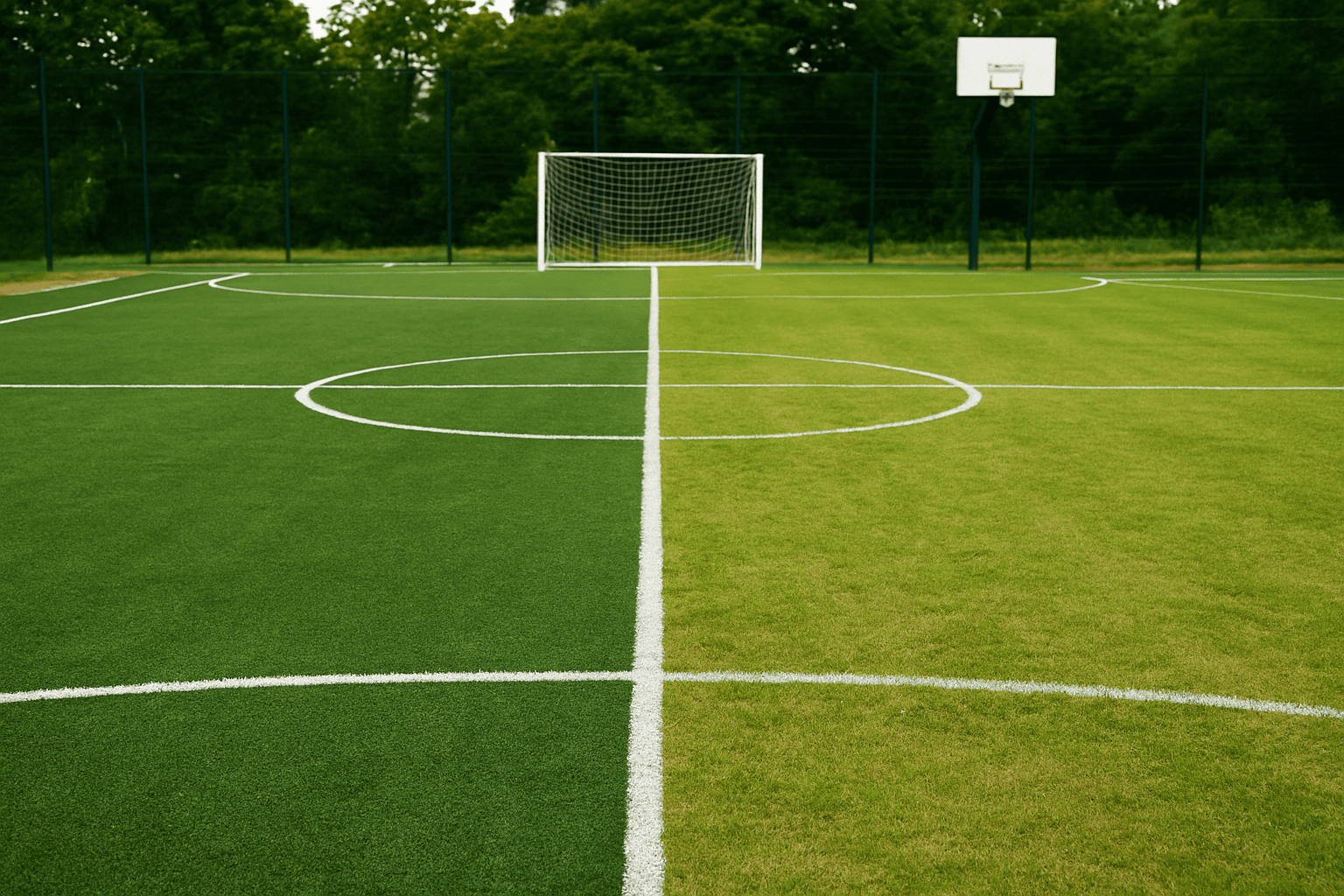
Modern artificial turf is a long way from the hard, abrasive surfaces of the 1980s. Today's third and fourth-generation systems use long, soft polyethylene fibres with rubber and sand infill that mimic the feel of natural grass remarkably well. FIFA, World Rugby, and the International Tennis Federation all have certification programmes for artificial turf because the surfaces have become genuinely competitive with natural grass for elite sport.
- For a facility manager, the practical benefits are straightforward:
- Year-round availability no seasonal closures, no rain cancellations
- Consistent surface quality same conditions on day one as in year five
- Low maintenance no mowing, no irrigation, no fertiliser, no overseeding
- High usage capacity a well-installed pitch can handle 80 to 100 hours of play per week
- Longer lifespan — quality systems last 10 to 15 years with basic upkeep
The Financial Case Is Straightforward
The Financial Case Is Straightforward
The installation cost of a full-size artificial turf pitch sits between USD 300,000 and USD 700,000 depending on the system specification, sub-base work required, and the supplier. That sounds significant, but compare it to the annual cost of maintaining a natural pitch at scale plus the revenue lost every time rain keeps the facility shut.
Most facilities that make the switch recover their investment within four to six years. After that, the cost of running the pitch drops to a fraction of what natural grass required. A basic maintenance programme for artificial turf costs roughly USD 3,000 to USD 8,000 per year predominantly for occasional brushing, infill top-ups, and line marking.
The revenue side of the equation matters too. A facility that can guarantee availability 365 days a year can charge premium booking rates, attract academy contracts, and host tournaments without the weather-related risk that natural grass brings.
Choosing the Right System for Your Facility
Choosing the Right System for Your Facility
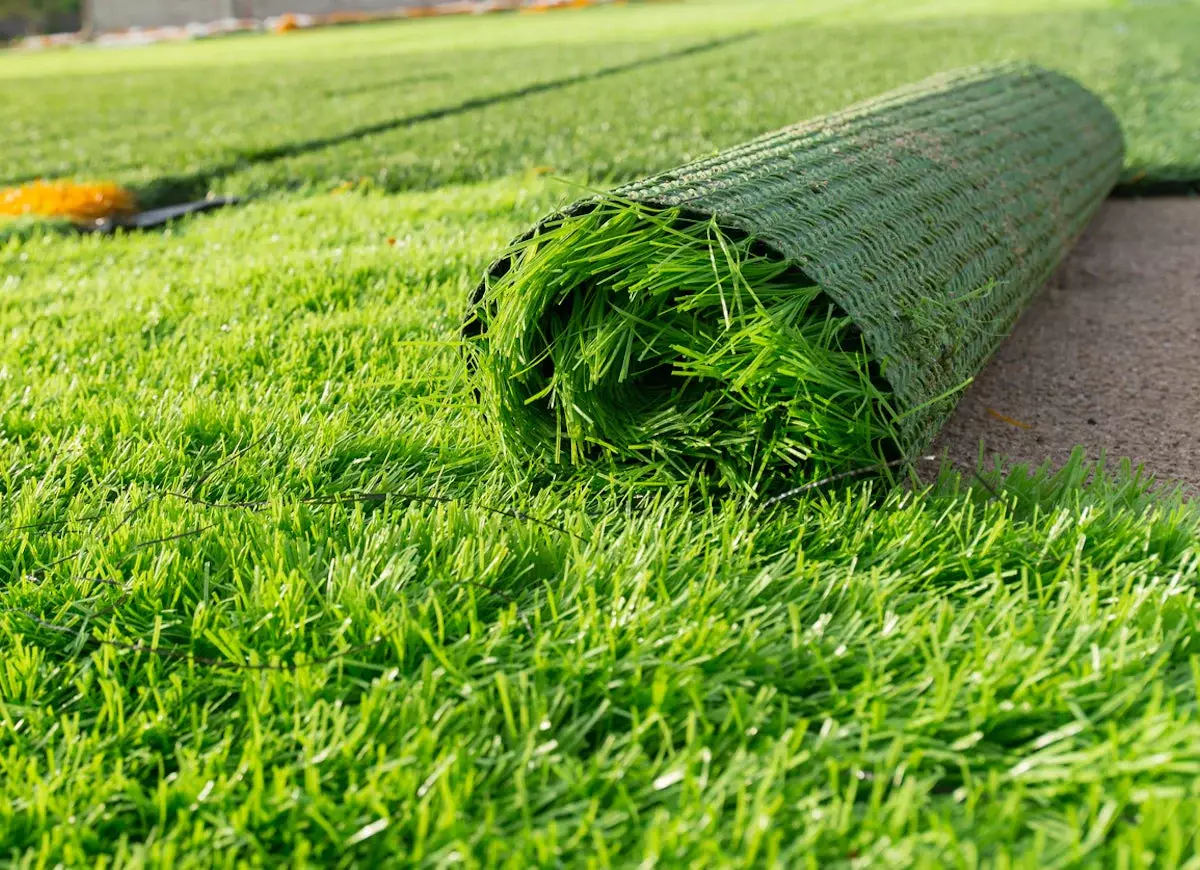
Not all artificial turf is the same, and the right specification depends on the sport,usage intensity, and climate.The main variables are:
- Pile height- typically 40–60mm for football, shorter for hockey and tennis
- Fibre type- monofilament yarns offer durability; texturised yarns give a softer feel
- Infill - SBR rubber is the most common; organic alternatives like cork and coconut are growing in popularity
- Backing - the base layer needs proper drainage channels to handle rainfall
- Certification - for competitive sport,look for FIFA Quality Pro,World Rugby Level 1 or 2, or FIH approval
If you are procuring turf for a school or community facility where certification is not required, you have more flexibility on specification which can bring the cost down without sacrificing surface quality.
Why the Source of Your Turf Matters
Why the Source of Your Turf Matters
Artificial turf is a volume product manufactured primarily in China and Europe. The difference in quality between suppliers can be significant, and it is not always obvious from looking at a sample. Factors like UV stabilisation, fibre density, backing weight, and yarn elongation all determine how the turf performs after five years of heavy use rather than in the first month after installation.
Working with an experienced export specialist who knows the manufacturing landscape and who can verify product quality against internationally recognised standards protects your investment. At Decospaa International, we source from certified manufacturing partners and supply facilities from the Middle East and Africa to Europe and Southeast Asia.
Ready to specify the right artificial turf for your project?
Connect with Decospaa International for expert consultation and end-to-end supply support.
Get in Touch - Info@decospaainternational.com