

Artificial grass has transformed how homeowners,villa owners,and commercial spaces think about outdoor landscaping.It stays green through scorching summers, heavy monsoons, and everything in between without the constant effort that natural grass demands. But here is what most people do not realise until after installation: low maintenance is not the same as no maintenance. A simple, consistent care routine is all it takes to keep your synthetic turf looking flawless and performing well for 10 to 15 years or more.
Table of Contents
Why Artificial Grass Still Needs Regular Care
Why Artificial Grass Still Needs Regular Care
The appeal of artificial grass is clear no mowing, no watering, no fertilising. But that does not mean you can install it and forget about it entirely. Over time, foot traffic flattens the fibres, organic debris like leaves and dust settles into the pile, and without the occasional rinse, surface build-up can lead to odour or discolouration.
The good news is that maintaining synthetic turf takes a fraction of the time and effort that natural grass demands. A few minutes each week and a deeper clean every couple of months is genuinely all it takes. Get the routine right and your artificial lawn will look as sharp in year eight as it did on installation day.
How Low-Maintenance Is Artificial Grass, Really?
How Low-Maintenance Is Artificial Grass, Really?
Very low but the comparison with natural grass tells the full story. Here is exactly what changes when you make the switch:
| Task | Natural Grass | Artificial Grass |
| Mowing | Every 1–2 weeks | Never required |
| Watering | Daily in summer | Occasional rinse only |
| Fertilising | Monthly | Never required |
| Weeding | Ongoing | Rarely needed |
| Brushing | Not needed | Light every 1–2 weeks |
| Deep Cleaning | Not applicable | 2–4 times per year |
| Annual maintenance cost | ₹15,000–₹40,000 | ₹2,000–₹5,000 |
Most homeowners spend fewer than 30 minutes a month on synthetic turf upkeep once it is properly installed. That is a significant improvement over the hours and the budget that a natural lawn demands year after year.
Your Weekly and Monthly Maintenance Routine
Your Weekly and Monthly Maintenance Routine
Consistency is the key to a great-looking artificial lawn. A short weekly routine combined with a deeper monthly check will prevent most common problems before they develop.
Weekly Tasks
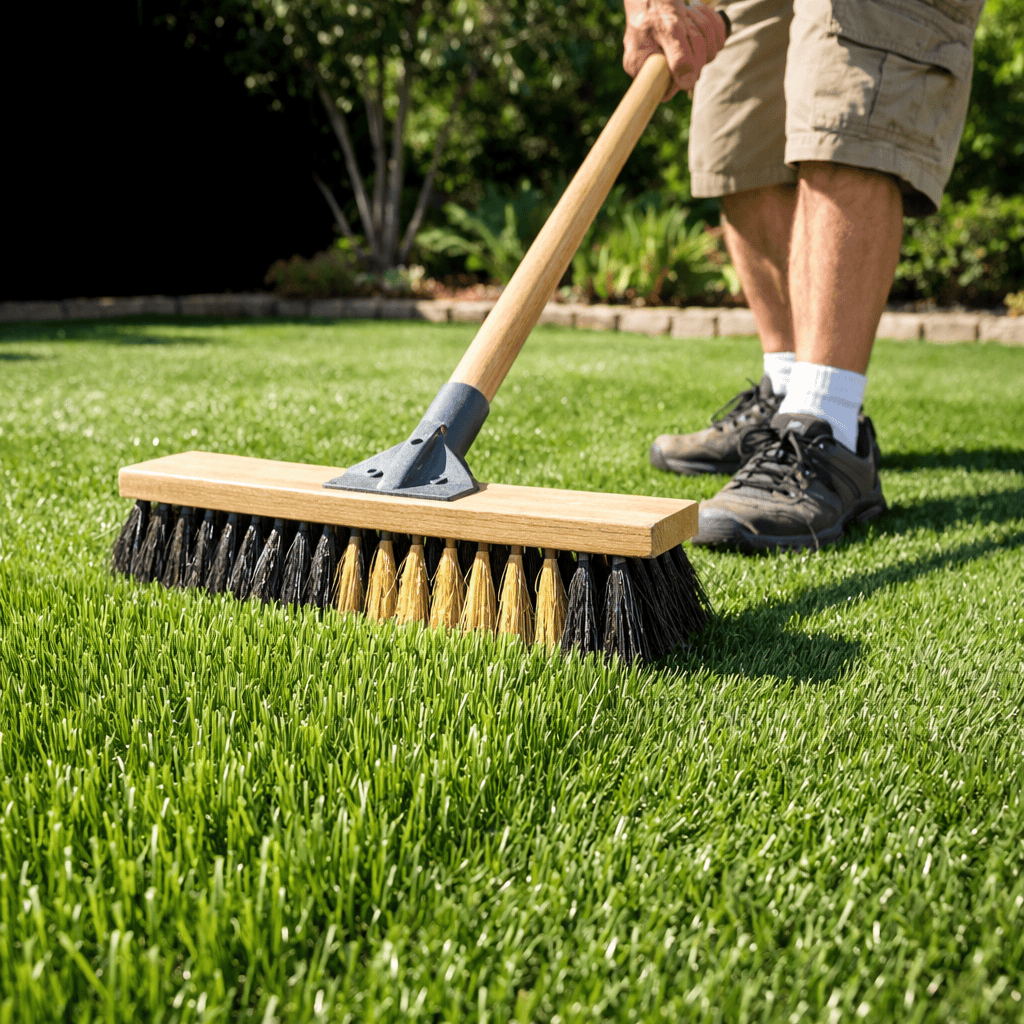
- Brush the fibres-Use a stiff-bristled brush or an artificial grass rake. Always brush against the grain to lift flattened fibres back upright. Focus on high-traffic zones like pathways, seating areas, and children's play spots. Never use a metal-tined rake it damages the fibres.
- Clear debris-Remove leaves, twigs, and dust using a leaf blower on a low setting or a plastic rake. Do not allow organic matter to sit on the surface for extended periods-it can encourage moss or algae in humid conditions.
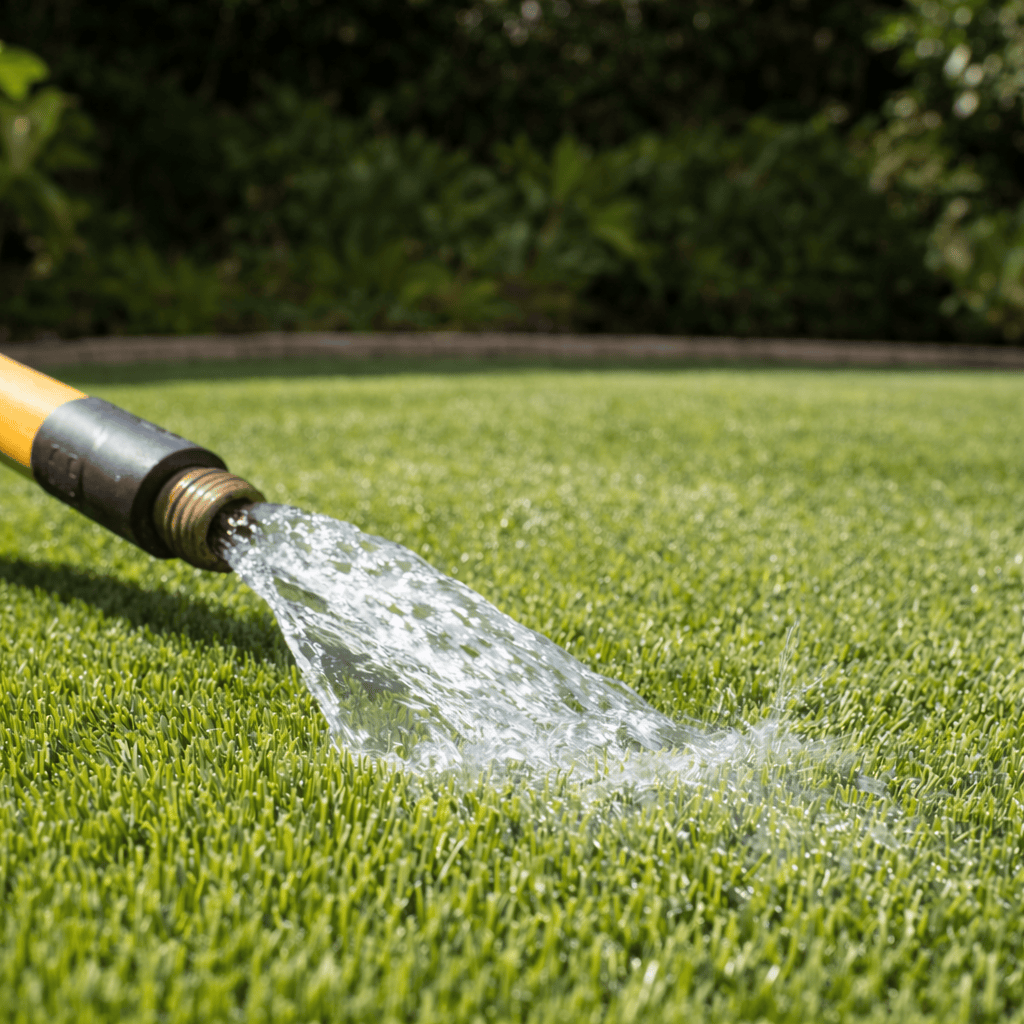
- Quick rinse-A light hose-down once a week washes away surface dust and pollen. In warmer months, this also helps keep the surface temperature comfortable underfoot.
Monthly Deep Clean
- Clear all debris with a rake or blower
- Rinse the entire surface thoroughly with a garden hose
- Mix warm water with a small amount of mild, non-toxic detergent
- Apply with a soft brush or garden sprayer, working gently into the pile
- Rinse completely — no soap residue should remain in the fibres
- Allow to air dry, then give the surface a final brush to restore fibre position
How to Remove Stains from Artificial Grass
How to Remove Stains from Artificial Grass
Most stains on synthetic turf are straightforward to remove the key is acting quickly before they set into the fibres. Here is a practical reference for the most common situations:
Long pile turf (40 mm and above)
Long pile turf is the premium category, chosen primarily for luxury villa landscapes and decorative garden installations where visual impact is the primary objective. The extended fibers create a genuinely lush, almost indistinguishable-from-natural appearance. It does require occasional brushing to maintain fiber upright position, but for the right application the visual result justifies the minor additional attention.
| Stain Type | Best Treatment |
| Food and drink spills | Blot excess immediately, rinse with cold water, use mild detergent if needed |
| Mud and dirt | Let it dry fully, then brush off and rinse — never scrub wet mud deeper into the pile |
| Oil or grease | Apply a small amount of washing-up liquid, work in gently, rinse thoroughly |
| Chewing gum | Harden with an ice pack, then carefully scrape off with a blunt plastic tool |
| Pet waste (solid) | Remove promptly, rinse the area with water and a pet-safe enzymatic cleaner |
| Bird droppings | Rinse with water once dry, scrub lightly with a soft brush if needed |
| Tree sap or resin | Apply a small amount of mineral spirits, rinse well with water afterwards |
Maintenance Tips for Pet Owners
Maintenance Tips for Pet Owners
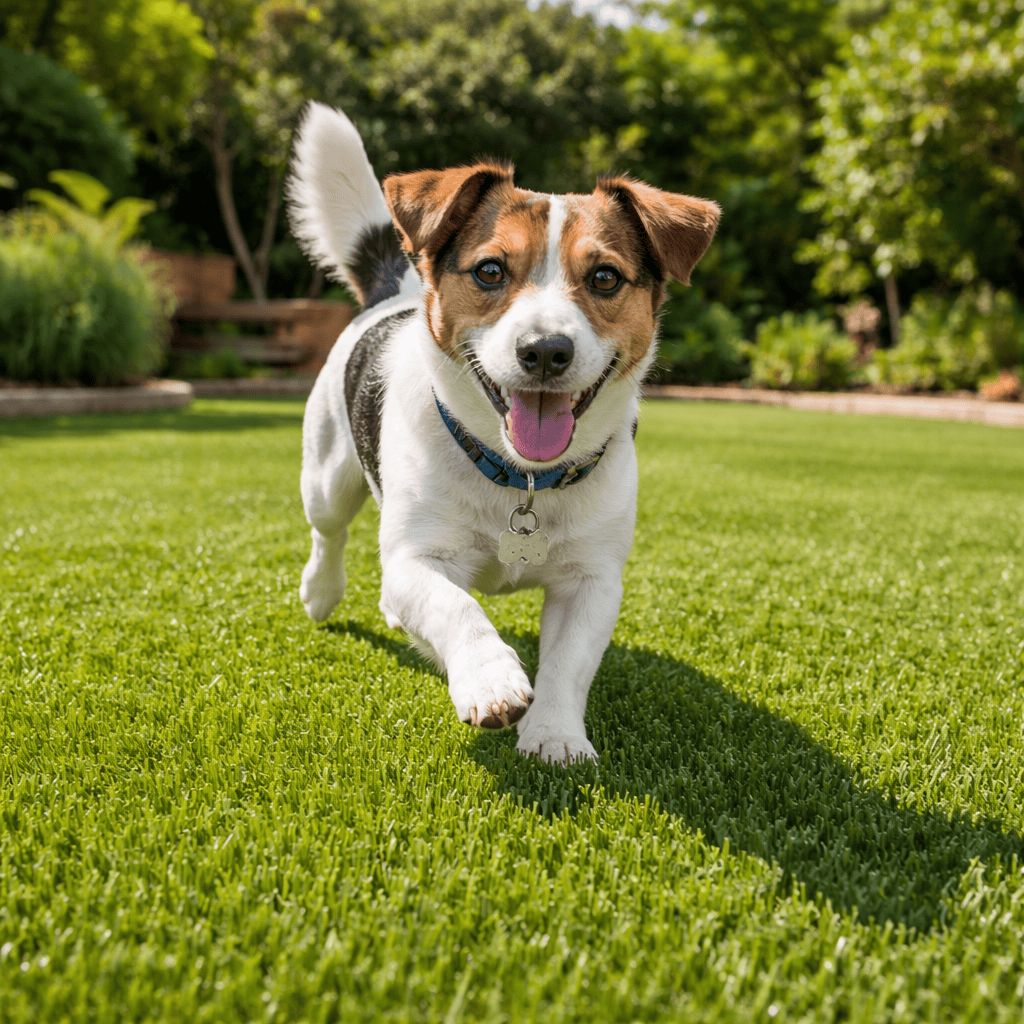
Artificial grass and pets are a natural combination but homes with dogs especially benefit from a slightly more attentive routine. The right habits keep the surface hygienic, odour-free, and comfortable for both pets and people.
Daily and Weekly Habits
- Solid waste — Remove immediately and rinse the area with clean water. The faster you act, the easier the clean-up.
- Urine — Quality artificial grass has a permeable backing that allows liquids to drain through freely. A regular water rinse is sufficient in most cases. In hot weather, rinse more frequently to prevent odour build-up.
- Odour control — Use a diluted pet-safe disinfectant or a specialist artificial grass deodoriser once a week during summer months. Avoid bleach or ammonia-based products — they are harmful to animals and can degrade fibre quality over time.
- Fur and hair — A quick once-over with a stiff brush or a leaf blower on a low setting keeps pet hair off the surface effectively.
- If you have multiple pets or a large dog, consider Decospaa's dedicated pet turf range — engineered with enhanced drainage capacity and antimicrobial backing technology for exactly this use case.
How to Extend the Lifespan of Your Artificial Grass
How to Extend the Lifespan of Your Artificial Grass
A quality artificial grass installation is designed to last between 10 and 20 years. How close to that upper end you get depends almost entirely on how well the surface is maintained.These habits make the biggest difference over the long term:
- Brush consistently - Regular brushing prevents fibre matting and keeps the surface looking full and natural. This single habit has more impact on long-term appearance than any other.
- Top up infill as needed - Sand or rubber infill supports the fibres and provides surface cushioning. Depleted infill leads to faster fibre wear and a less comfortable surface underfoot.
- Keep heavy objects moving - Furniture, planters, and play equipment left in one position permanently will flatten the fibres beneath them. Use furniture feet or rotate positions periodically.
- Never use open flames nearby - Artificial grass is not fireproof. Keep BBQs, fire pits, and fireworks at a safe distance from the surface at all times.
- Trim overhanging plants - Trees and shrubs that overhang the turf drop leaves, sap, and organic matter that accelerates debris build-up and can stain the surface.
- Schedule an annual professional clean - Once a year, a professional deep clean and inspection will address compacted infill, fibre restoration, and any edge or seam issues that need attention. It is the single most effective investment in extending your turf's lifespan.
Maintain Less. Enjoy More.With the right care routine, your artificial grass needs less than 30 minutes of maintenance per month — while staying perfectly green, clean, and visually flawless all year round.No mud. No patchiness. No seasonal decline. Just consistent performance and aesthetics.Ready to upgrade your outdoor space with confidence?Decospaa International delivers high-performance artificial grass solutions for residential, villas, terraces, and commercial landscapes across India engineered for durability, appearance, and long-term value.Get samples. Get specifications. Get it right from day one.