

The first time most buyers go looking for artificial turf at an international level, they get overwhelmed quickly. There are hundreds of suppliers, dozens of specifications, price ranges that vary by 300%, and a list of technical terms pile height, dtex, gauge, infill rate that means very little without context.
This guide is written for contractors, distributors, landscape companies, and facilities managers who are sourcing artificial turf for the first time, or who have had a bad experience in the past and want to do things more carefully next time. It covers what to ask, what to check, and what the red flags look like.
Table of Contents
Define Your Application Before You Look at Products
Define Your Application Before You Look at Products
The single biggest mistake buyers make is approaching suppliers without a clear brief. Artificial turf for a five-a-side football pitch has completely different requirements to turf for a hotel rooftop garden or a school playground. Getting this wrong means specifying a product that either fails early or costs far more than it needs to.
Before contacting any supplier, get clear on the following:
- What is the surface being used for? (sport, landscaping, leisure, events)
- How many square metres do you need?
- What is the expected usage intensity? (hours per week, number of users)
- Does the product need to carry any certifications? (FIFA, FIH, World Rugby)
- What is the climate at the installation location? (temperature range, UV exposure, rainfall)
- Is this a permanent or temporary installation?
With those answers in hand, a good supplier can guide you to the right product fairly quickly. Without them, you are going to receive a dozen sample swatches and a confusing set of options.
Understanding the Key Specifications
Understanding the Key Specifications
You do not need to become a turf engineer, but understanding the key numbers helps you compare quotes meaningfully.
Pile Height
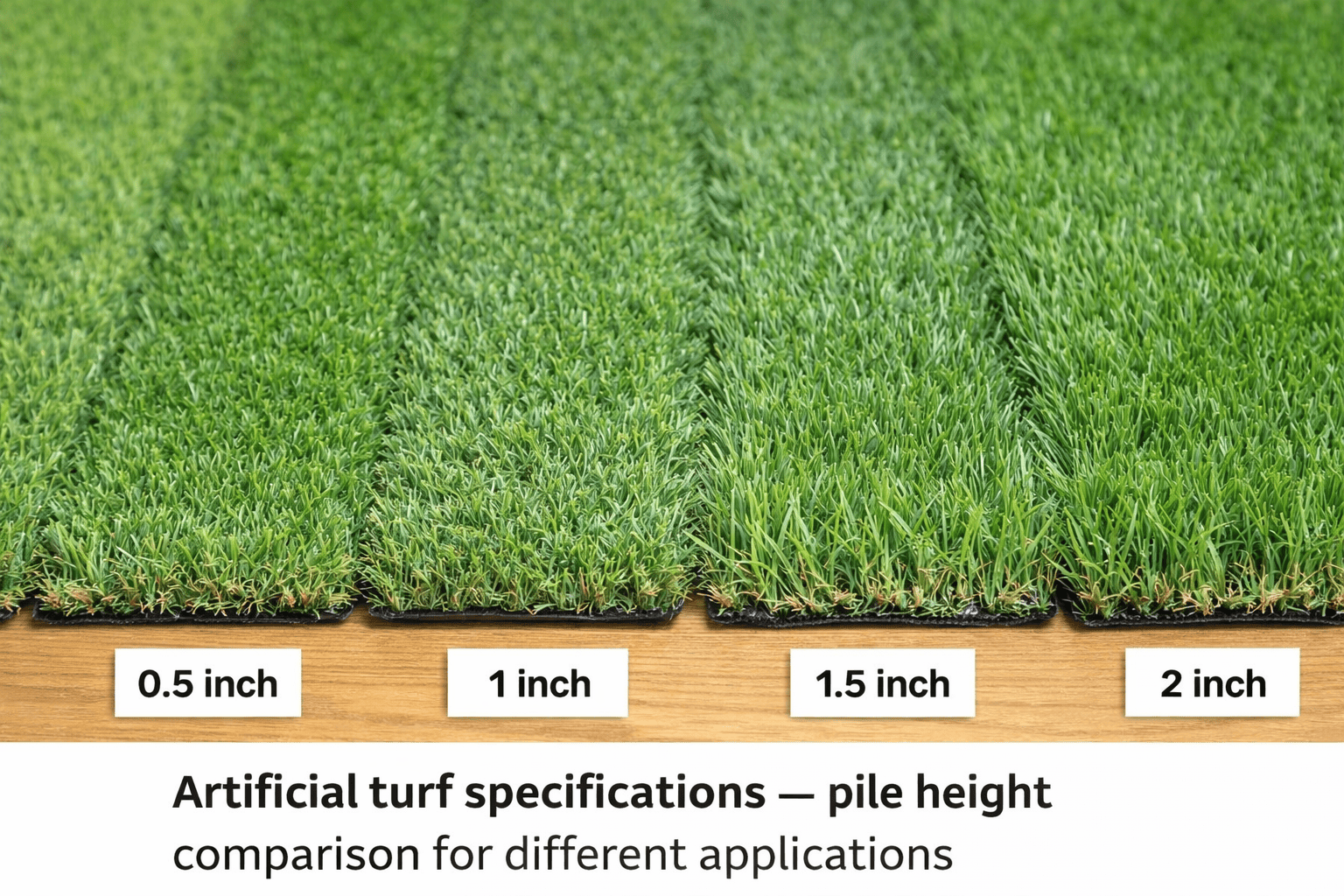
This is the length of the grass fibre, measured in millimetres. For football, the FIFA recommended range is 40 60mm. For decorative landscaping, 25 40mm is typical. For multi-sport or playground applications, shorter piles (20–30mm) are often more practical. Higher pile is not always better it depends entirely on the application.
Dtex (Fibre Weight)
Dtex measures the weight of the yarn per 10,000 metres. Higher dtex means heavier, thicker fibres which generally means better durability and resilience. For sports use, look for dtex of 11,000 or above. For landscaping, dtex of 7,000–10,000 is usually sufficient.
Gauge (Stitch Spacing)
Gauge refers to how many rows of fibres are stitched per unit of width. A finer gauge means more fibres and a denser, more natural-looking surface. Standard gauges for football turf range from 3/4 inch to 5/8 inch the smaller the number, the denser the turf.
Stitch Rate
The number of stitches per square metre directly affects pile density and, therefore, durability and appearance. Quality sports turf typically has a stitch rate of 180,000 to 220,000 per square metre. Lower stitch rates are fine for low-traffic decorative applications but will wear poorly under heavy use.
Check the Supplier's Credentials
Check the Supplier's Credentials
Hotels and Resorts
The artificial turf market includes manufacturers producing consistently excellent products and others cutting corners that are impossible to detect from a sample. Here is what to verify before placing an order:
- Can they provide third-party test reports from accredited labs (not just their own in-house testing)?
- Do their products carry FIFA, FIH, or relevant international certification?
- What is their minimum order quantity and is it realistic for your project?
- Can they provide references from projects in similar climates or applications?
- What warranty do they offer and what does it actually cover?
Be cautious of suppliers who quote unusually low prices without explanation, who cannot provide test data, or who are evasive about the manufacturing origin of the product. These are consistent indicators of lower-quality material that will fail to perform in real-world conditions.
Get Clarity on Shipping and Trade Terms
Get Clarity on Shipping and Trade Terms
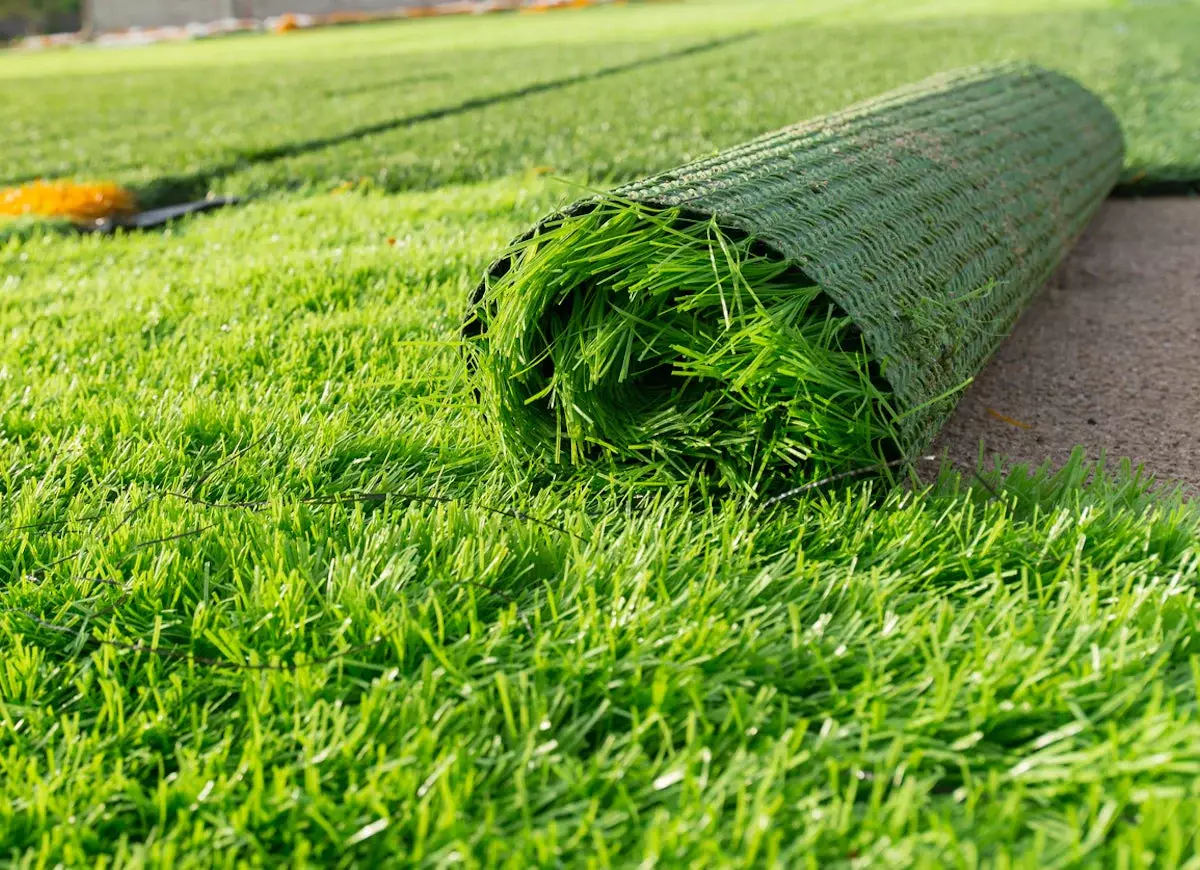
Artificial turf ships in rolls typically 2 metres wide and 25 metres long. A roll weighs between 60 and 120kg depending on specification. For large projects, you are usually looking at a 20ft or 40ft container shipment, which adds logistics planning to the procurement process.
Make sure your quote clearly defines:
- Incoterms FOB (Free On Board), CIF (Cost Insurance Freight), or DDP (Delivered Duty Paid) all have very different risk and cost implications for the buyer
- Lead time manufacturing to port can take 15 45 days depending on order size and factory scheduling
- Packing specifications how the rolls are labelled, packed, and protected against moisture in transit
- Port of loading and destination some suppliers have preferred logistics partners that can affect delivery times
If you have not imported goods in significant quantities before, working with a freight forwarder in your country who has experience with synthetic sports surfaces is worth the additional cost.
Why Working with an Export Specialist Saves Money
Why Working with an Export Specialist Saves Money
Going direct to a factory might seem like the most cost-effective route. In practice, it often is not especially for buyers who are new to the market or placing orders that are large enough to matter but not large enough to command priority treatment from a major manufacturer.
An export specialist like Decospaa International has existing relationships with certified manufacturing partners, knows which factories have consistent quality control, and can consolidate orders for buyers who need multiple product types. We handle the logistics, documentation, and quality verification which means you receive a product that matches what you specified, not what was easiest to ship.
Looking to import artificial turf with reliable quality and competitive pricing?
Decospaa International handles product selection, factory sourcing, inspection, and logistics end to end.
Get Your Quote Today: Info@decospaainternational.com