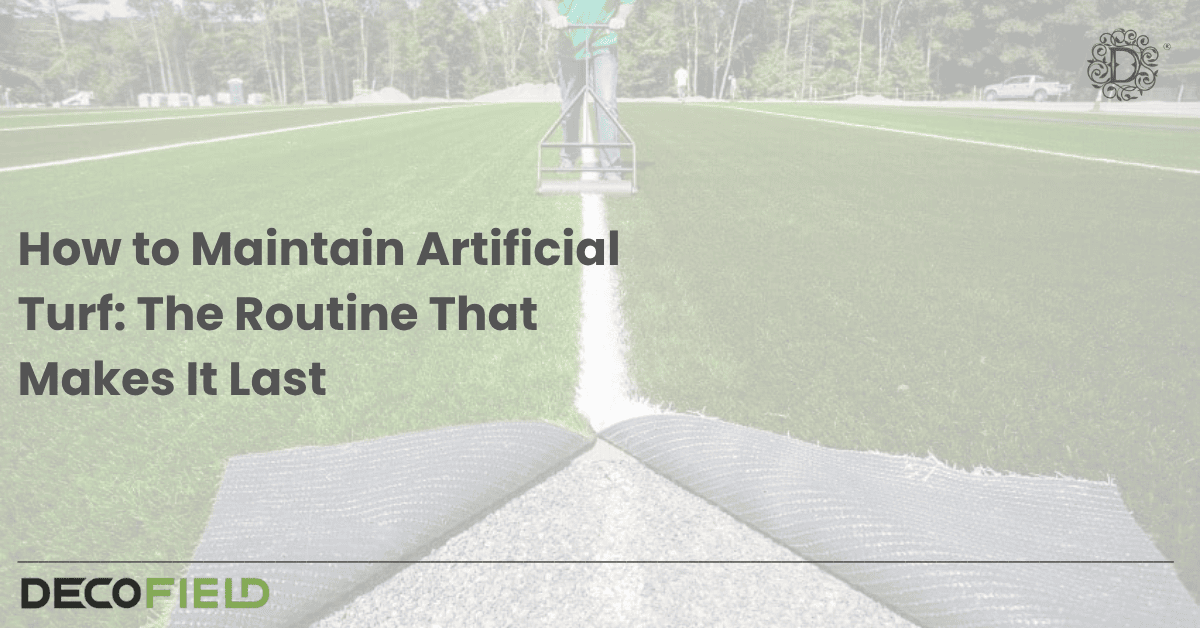
One of the most common things people say after installing artificial turf is that they did not realise how little work it would take. No mowing, no watering, no seasonal renovation. But 'low maintenance' is not the same as 'no maintenance' — and the facilities that get 12 to 15 years out of their artificial turf surface are the ones that follow a simple, consistent routine.
This guide covers everything you need to keep artificial turf performing well over the long term, whether you are managing a sports facility, a school playground, or a residential garden installation
Table of Contents
Why Maintenance Matters More Than People Expect
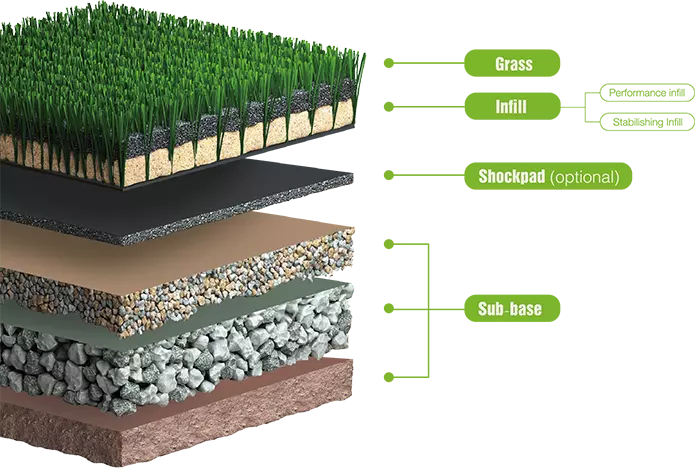
Artificial turf is built to be durable, but it has two enemies: compaction and contamination. Compaction happens when the infill material gets pushed to the edges or base of the pile, leaving the fibres unsupported and matted flat. Contamination — from organic debris, animal waste, algae, or rubber particles migrating to the surface — affects both the appearance and the safety of the surface.
Regular, light maintenance prevents both problems. It keeps the fibres upright, the infill evenly distributed, and the surface hygienic. The result is a pitch or garden that looks almost the same in year eight as it did in year one.
The Basic Maintenance Routine
The Basic Maintenance Routine
Weekly
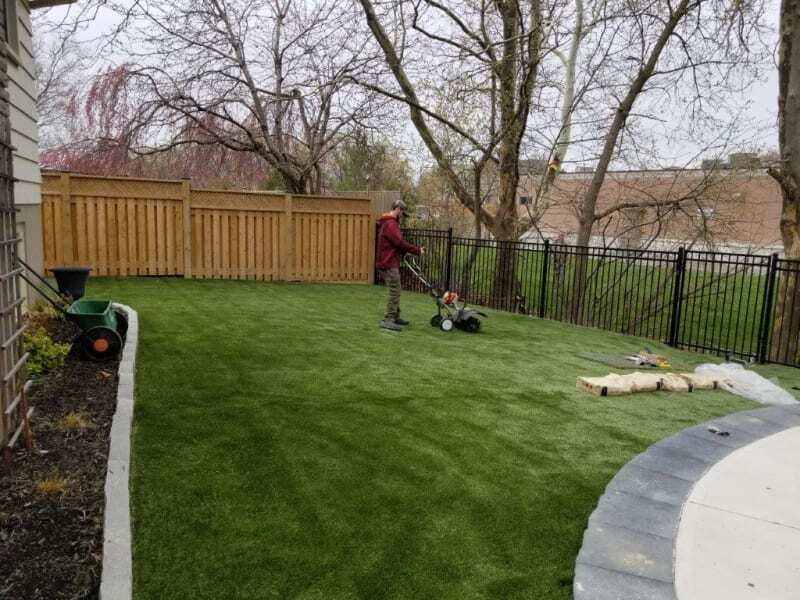
For sports facilities, a post-session check should be standard practice. For residential or light commercial installations, a weekly walk-around takes five minutes.
Remove loose debris — leaves, twigs, paper, and litter can be removed with a leaf blower or a stiff brush. Do not use metal rakes, which can damage the fibres
Check for standing water — good artificial turf drains freely, but blocked drainage holes (usually caused by compacted debris) can cause ponding. Clear any blockages with a stiff brush
Inspect for damage — small tears, seam separations, or areas where infill has been displaced should be noted and addressed quickly before they develop into larger problems
Monthly
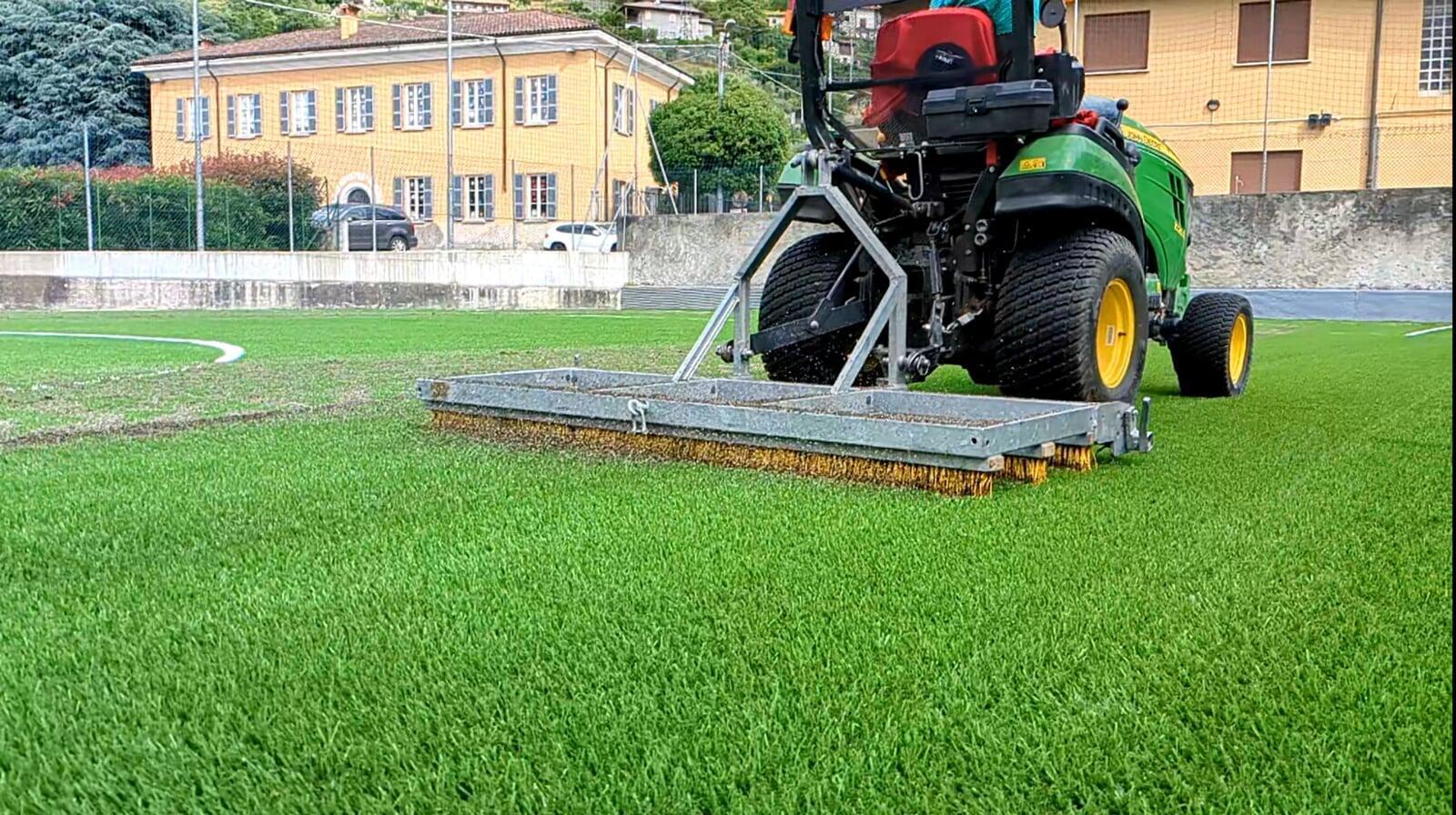
Brush the fibres — use a power brush or a stiff nylon-bristle broom to work through the pile and stand the fibres back upright. This is the single most important maintenance task and is often neglected
Check infill levels — look for low spots where the infill has been worn or displaced. These should be topped up with the appropriate infill material to maintain consistent pile support
Clean any stained areas — food spills, bird droppings, and similar contamination should be cleaned with a mild, pH-neutral detergent and rinsed thoroughly
Annually
Full professional service — a thorough deep clean with an appropriate sanitising agent, followed by a full infill analysis and top-up, is recommended once a year for sports facilities and every two years for residential or light commercial installations
Seam and anchor inspection — check all perimeter edges and internal seams for lifting or separation, and re-glue or re-nail as required
Performance testing — for certified sports surfaces, an annual PACE (Player-Surface Contact) test confirms the surface still meets the required specification
A few practices consistently cause premature wear or damage to artificial turf:
Metal bladed tools — metal rakes, wire brushes, and edging tools will cut fibres and damage the backing
Solvent-based cleaners — use only pH-neutral, water-based cleaning products approved for synthetic surfaces
High-pressure washing — pressure washing forces infill out of place and can damage the backing. Low-pressure rinsing is fine
Heavy vehicles — cars, vans, and forklifts should never be driven across artificial turf. Rubber tyres leave marks and compact the infill severely
Open flames or cigarettes — artificial turf fibres are generally UV-resistant but not fireproof. Burns leave permanent damage that cannot be repaired invisibly
Dealing With Specific Problems
Dealing With Specific Problems
1. Matting and Flattening
Heavy foot traffic in goal areas or entry points causes fibres to flatten. Regular power brushing resolves this in most cases. If fibres have been permanently deformed, a localised infill top-up combined with brushing usually restores the surface.
2. Algae and Moss Growth
In shaded, damp environments, algae and moss can colonise the surface and make it slippery. A biocide treatment — using a product specifically approved for synthetic turf — applied twice a year prevents buildup. Once established, algae needs a more thorough treatment followed by power brushing and rinsing
3. Pet Waste
For residential pet owners, solid waste should be removed immediately and the area flushed with water. For urine, regular flushing combined with an enzyme-based sanitiser keeps odours under control. Products designed for artificial turf with pets are available and work well with a consistent routine..
Getting the Most From Your Investment
Getting the Most From Your Investment
A quality artificial turf system is a significant investment, and the maintenance routine is what determines whether it lasts 8 years or 15. The good news is that this routine takes far less time and money than natural grass requires — even at its most demanding.
If you are setting up a new facility or working with a client on a large installation, Decospaa International can provide a maintenance schedule tailored to the specific product, climate, and usage profile. That documentation is part of what we provide as standard on every commercial project
Get a customized turf maintenance plan today.:
Get in touch: info@decospaainternational.com
Get in touch: info@decospaainternational.com