
Decospaa International
0
0

How Is Artificial Turf Made? A Complete Guide to the Manufacturing Process

07.04.26 12:33 PM By Nishil Mutha

 Artificial turf is manufactured by melting polymer granules (polyethylene, polypropylene, or nylon) and extruding them into fibers, which are then tufted through a backing fabric, coated with latex or polyurethane, and rolled into finished turf. 
The process involves 8 key stages: polymer preparation → fiber extrusion → yarn twisting → tufting → primary backing → secondary coating → quality testing → rolling and packaging.

Table of Contents

Artificial turf has come a long way from the scratchy green carpet first installed in the Houston Astrodome in 1966. Today's synthetic grass looks, feels, and even performs remarkably close to natural grass — and the science behind how it's made is fascinating. Whether you're a sports facility manager, a landscape designer, or simply a curious homeowner considering synthetic grass for your lawn, understanding the manufacturing process helps you make smarter, more informed buying decisions.

In this guide, we walk you through every stage of artificial turf production — from raw materials to the finished roll ready for installation

​What Is Artificial Turf Made Of?

Before we get into the "how," it helps to understand the "what." Modern artificial turf is composed of three primary components:
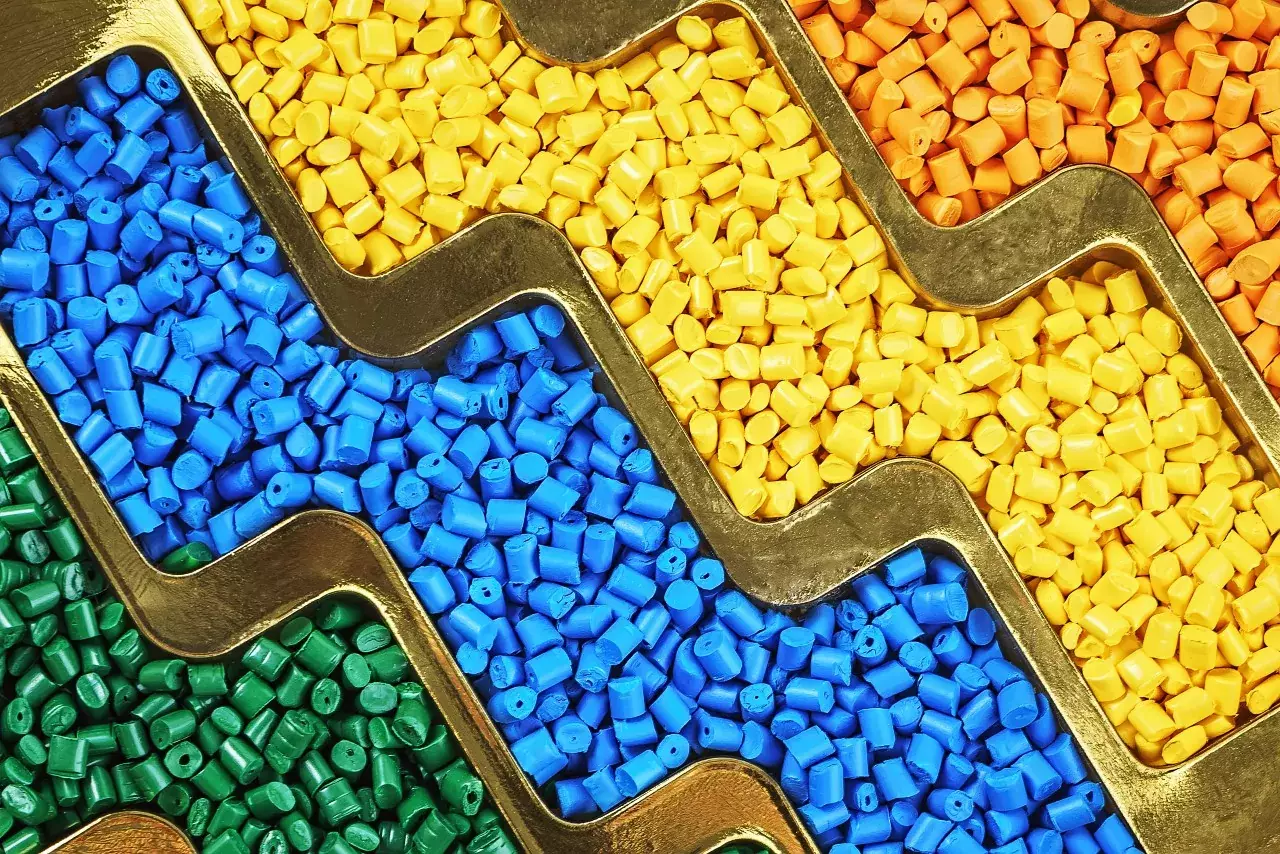
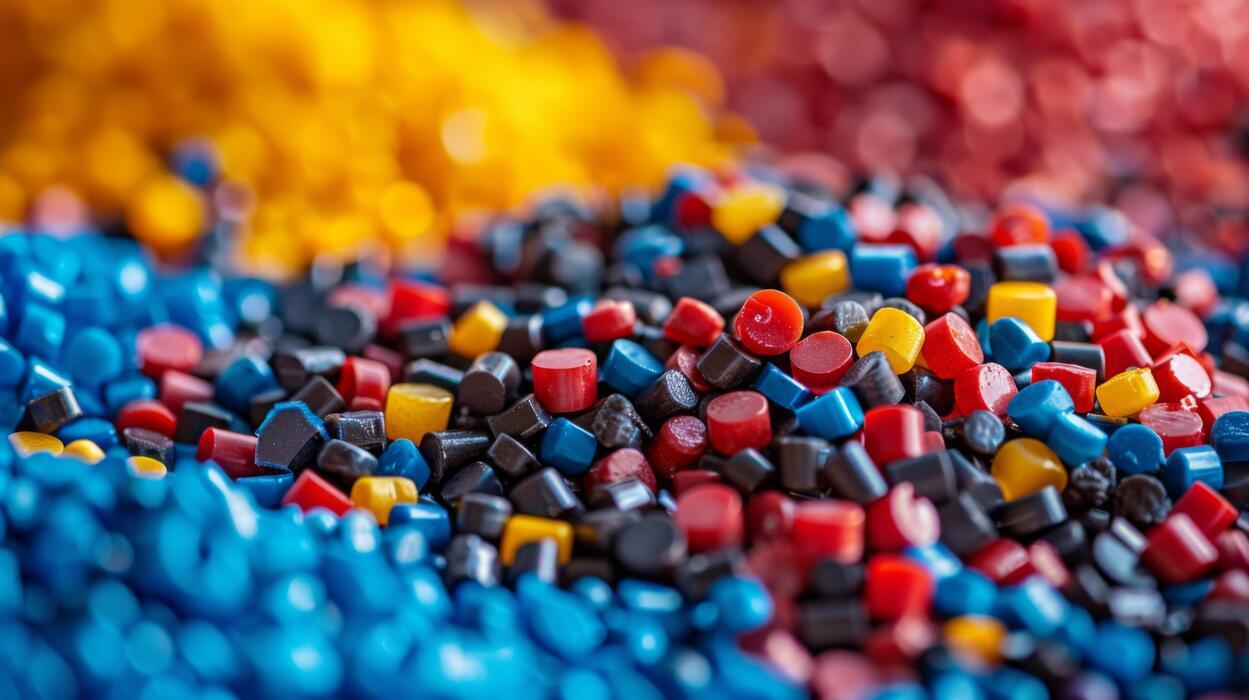
Colored polymer granules used in artificial turf manufacturing, highlighting material composition for high-performance synthetic grass systems
© Copyright 2026 @ Decospaa International LLP. All Rights Reserved.
1. Synthetic Fibers (Pile/Yarn) These are the individual "grass blades" you see and touch. They are typically made from one of three polymer materials:
  • Polyethylene (PE) — The most common choice for landscaping and sports fields. Soft, durable, and UV-resistant, PE fibers closely mimic the look and feel of natural grass.
  • Polypropylene (PP) — A stiffer, more economical option used for decorative applications or low-traffic areas
  • Nylon (PA) — The strongest and most resilient fiber available, ideal for high-traffic sports fields. It recovers its shape after heavy use but tends to be stiffer and more expensive.
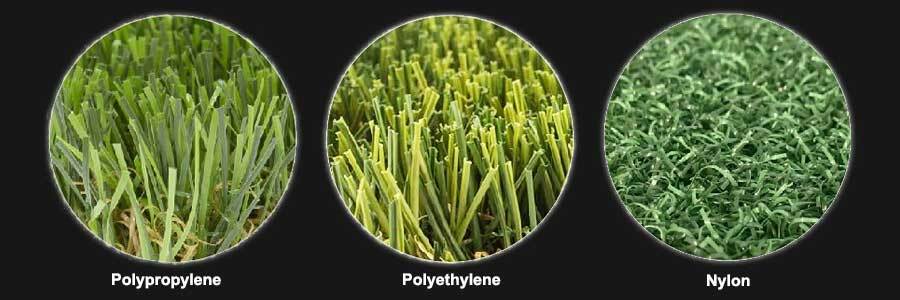
    Comparison of artificial turf blade types showing polypropylene, polyethylene and nylon fibers for high-performance synthetic grass applications
    © Copyright 2026 @ Decospaa International LLP. All Rights Reserved.
    2. Backing System The backing is the structural foundation that holds the fibers in place. It typically consists of a primary backing (a woven fabric through which the fibers are stitched) and a secondary coating (usually latex or polyurethane) that locks the fibers and provides dimensional stability.

    3. Infill Material Infill is spread between the grass blades after installation. It provides cushioning, supports fiber upright positioning, and mimics the natural soil layer. Common infill materials include:
    • Silica sand
    • Crumb rubber (recycled tire granules)
    • Thermoplastic elastomer (TPE)
    • Cork or organic alternatives

    Step-by-Step: How Artificial Turf Is Manufactured

    ​Step 1 — Polymer Granule Preparation

    The manufacturing process begins with raw polymer granules — pellets of polyethylene, polypropylene, or nylon. These granules are the building blocks of every grass fiber.
    Colored polymer granules used in artificial turf fiber production, showcasing raw material base for high-performance synthetic grass systems
    © Copyright 2026 @ Decospaa International LLP. All Rights Reserved.
    At this stage, manufacturers blend in key additives including:
    • UV stabilizers — to protect fibers from sun degradation and color fading
    • Colorants — to achieve realistic shades of green, including multi-tone blends that mimic natural grass variations
    • Plasticizers and softeners — to improve flexibility and texture
    • Antistatic agents — particularly important for indoor applications

    The precise recipe of these additives is often proprietary and is one of the key differentiators between premium and economy-grade products.

    ​Step 2 — Fiber Extrusion

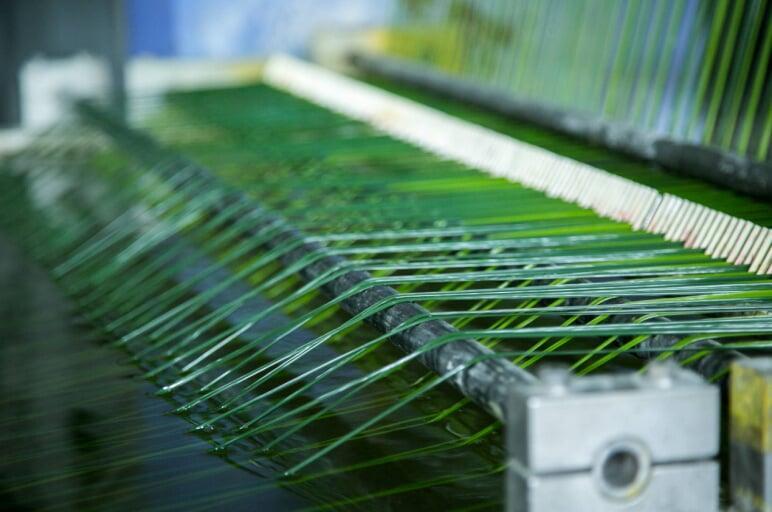
    Once the polymer blend is ready, it's fed into an extrusion machine — the heart of artificial turf production.
    Artificial turf yarn extrusion process forming green fibers for durable sports turf and landscaping grass production systems
    © Copyright 2026 @ Decospaa International LLP. All Rights Reserved.
    Here's how extrusion works:
    1. The polymer granules are melted at high temperatures (typically 200–280°C).
    2. The molten plastic is forced through a die — a metal plate with precisely shaped holes — to form continuous strands.
    3. The strands are cooled rapidly in a water bath, which solidifies them into the desired cross-sectional shape.
    4. The strands are then stretched under controlled tension — a process called drawing — which aligns the polymer molecules, dramatically increasing the fiber's tensile strength and durability.
    5. The fibers are cut to length and wound onto large spools called bobbins for the next stage.

      The cross-sectional shape of the fiber matters significantly. Common shapes include flat (blade-like), W-shaped, C-shaped, S-shaped, and diamond profiles. Each shape affects how the turf looks, how it recovers from foot traffic, and how it drains water.

      ​Step 3 — Yarn Twisting and Heat Setting
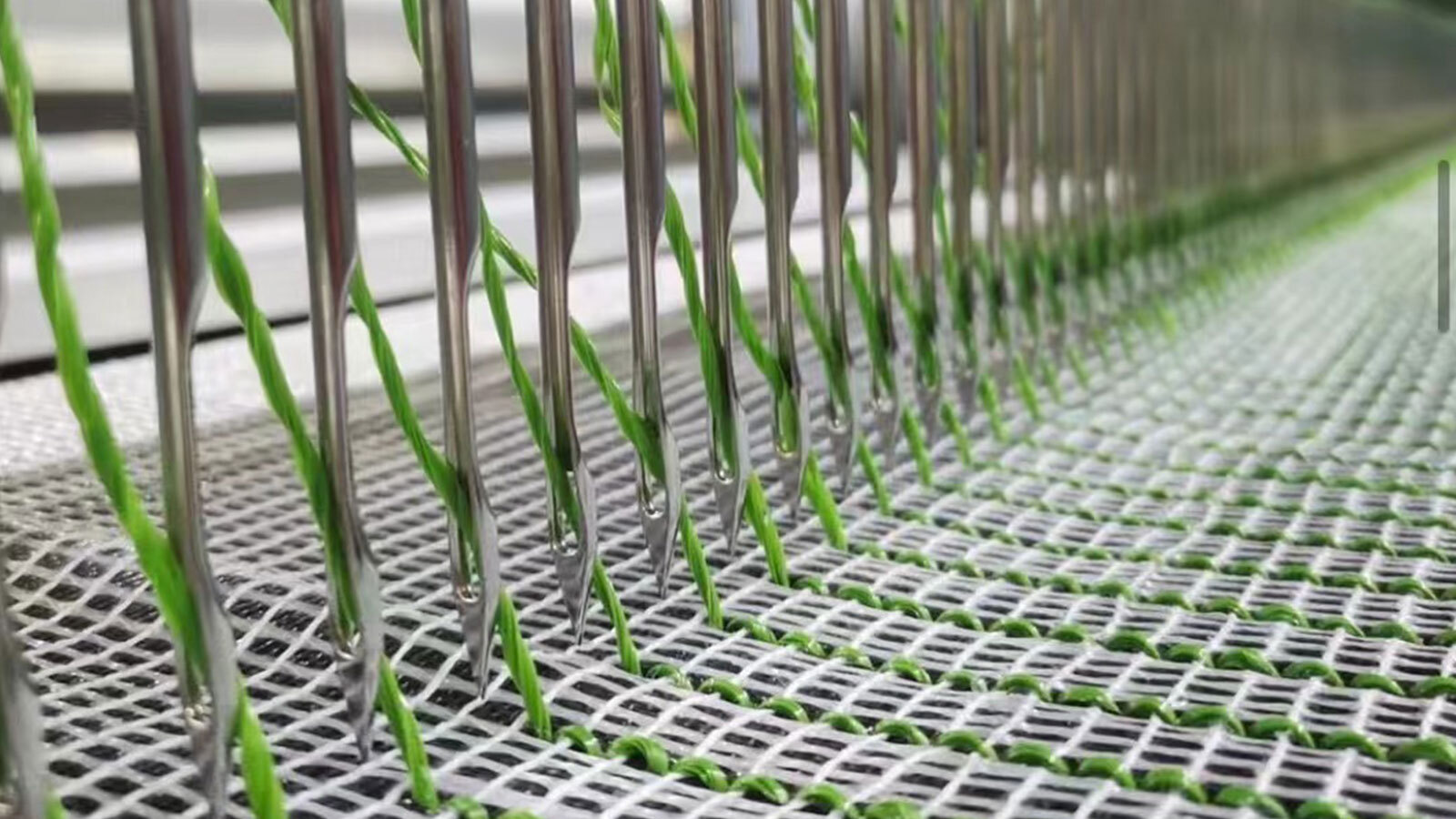
      For certain applications — particularly sports turf — individual fiber strands are twisted together to form a stronger, more resilient yarn. This twisted yarn is then passed through a heat-setting oven, which permanently locks the twist in place. This process dramatically improves the turf's ability to spring back after heavy, repeated use.
      Artificial turf tufting process inserting green fibers into backing, forming durable synthetic grass structure for sports and landscaping use
      © Copyright 2026 @ Decospaa International LLP. All Rights Reserved.
      Straight (un-twisted) fibers are more common in landscape and decorative applications where a flat, lush appearance is the priority.

      ​Step 4 — Tufting

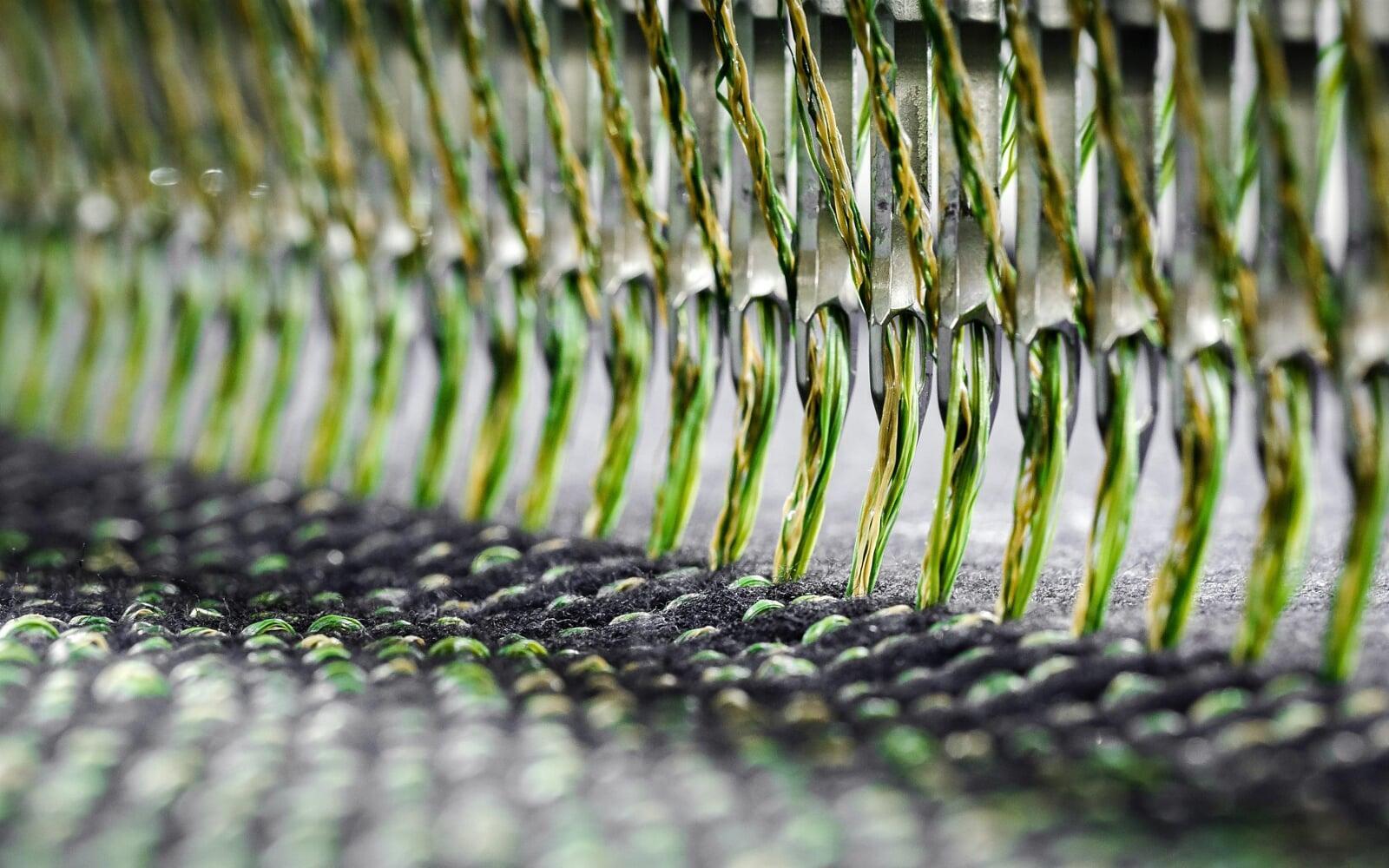
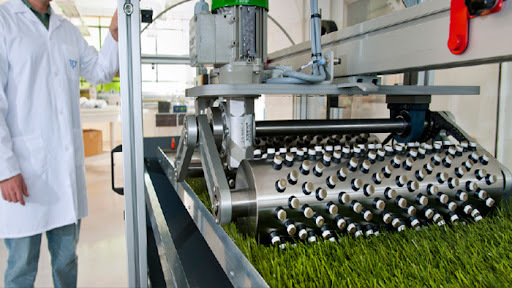
      Tufting is the process that transforms individual yarn spools into a finished turf carpet — and it is one of the most critical stages of artificial turf manufacturing.
      Close-up of tufting needles stitching green yarn into backing, forming high-density artificial turf fibers for durable sports and landscaping surfaces
      © Copyright 2026 @ Decospaa International LLP. All Rights Reserved.
      A tufting machine operates much like an industrial sewing machine, but on a massive scale. Here's what happens:
      1. Hundreds of yarn spools feed simultaneously into the tufting machine through individual needles.
      2. The needles punch the yarn downward through the primary backing — typically a woven or non-woven polypropylene fabric.
      3. A looper or hook mechanism on the underside catches each needle's loop and holds it in place.
      4. The needles retract, leaving loops of yarn anchored through the backing.
      5. Depending on the product, these loops may be cut to form individual fiber tips (cut-pile turf) or left as loops (loop-pile turf).

      Key parameters controlled during tufting include:
      1. Gauge — the spacing between needle rows (typically 3/16" to 5/8")
      2. Stitch rate — the number of stitches per inch, which determines pile density
      3. Pile height — the length of the grass blade above the backing (common heights range from 20mm to 60mm)

      Higher stitch density and tighter gauge generally produce a more lush, realistic-looking turf.

      ​Step 5 — Primary Backing Application

      After tufting, the underside of the turf is coated with a primary coat — typically a liquid latex compound. This coating:
      1. Locks the yarn tufts firmly in the backing to prevent fiber pull-out
      2. Adds initial dimensional stability to the product
      3. Prepares the surface for the secondary backing layer

      The coated turf passes through a curing oven to dry and harden the latex before moving to the next stage.

      ​Step 6 — Secondary Backing (Coating) Application
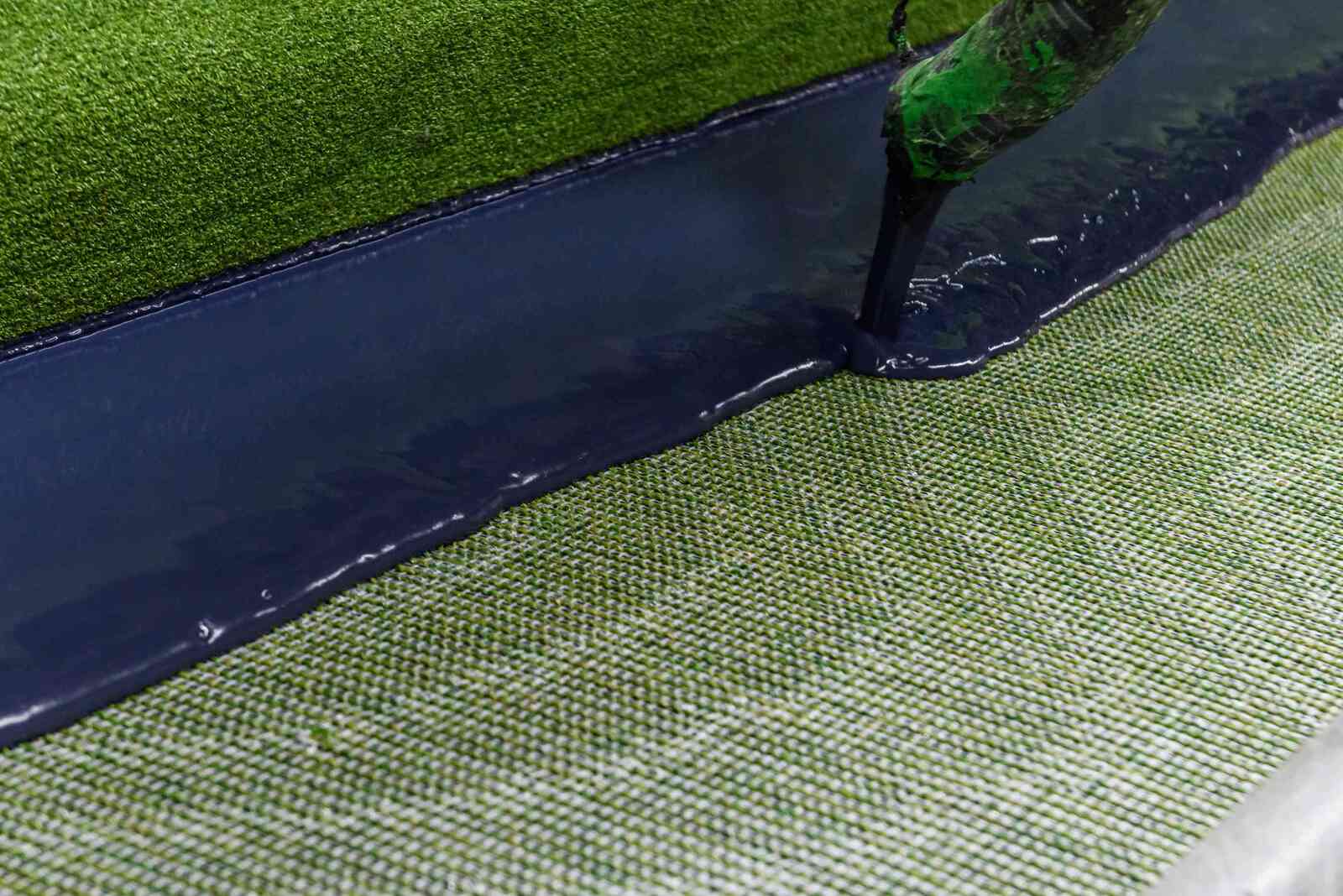
      The secondary backing is applied to the back of the turf for additional structural strength, stability, and drainage performance. There are two main options:
      Liquid backing application on artificial turf base layer showing durability engineering for premium synthetic grass performance
      © Copyright 2026 @ Decospaa International LLP. All Rights Reserved.
      A. Latex Coating: The traditional choice — a layer of styrene-butadiene (SBR) latex is applied and cured. This provides a firm, stable base suitable for most applications.

      B. Polyurethane (PU) Coating: An increasingly popular alternative. PU backing is more flexible, more durable, and provides superior drainage properties. Perforated PU backing in particular allows water to pass through freely — an important feature for outdoor sports fields and landscaping.

      Some high-performance products also use a woven fiberglass mesh embedded within the secondary backing for maximum dimensional stability and resistance to stretching.

      ​Step 7 — Quality Control and Testing

      Before any roll of artificial turf leaves the factory, it undergoes rigorous quality control testing. Reputable manufacturers test for:
      Artificial turf manufacturing machine tufting fibres into backing layer for durable sports turf and landscaping grass performance
      © Copyright 2026 @ Decospaa International LLP. All Rights Reserved.

      Test Parameter

      What It Measures

      Pile height

      Fiber length consistency

      Pile weight / dtex

      Fiber density and weight

      Tuft bind strength

      Resistance to fiber pull-out

      Tensile strength

      Backing durability

      UV resistance

      Color and fiber degradation over time

      Flammability

      Fire safety compliance

      Heavy metal content

      Safety for users and the environment

      Drainage rate

      Water permeability (L/m²/hour)

      Shock absorption

      Impact attenuation for sports applications

      For sports turf, additional field performance tests are conducted in accordance with international standards such as the FIFA Quality Programme, World Rugby, World Athletics, and EN 15330 (European standard for synthetic turf surfaces).

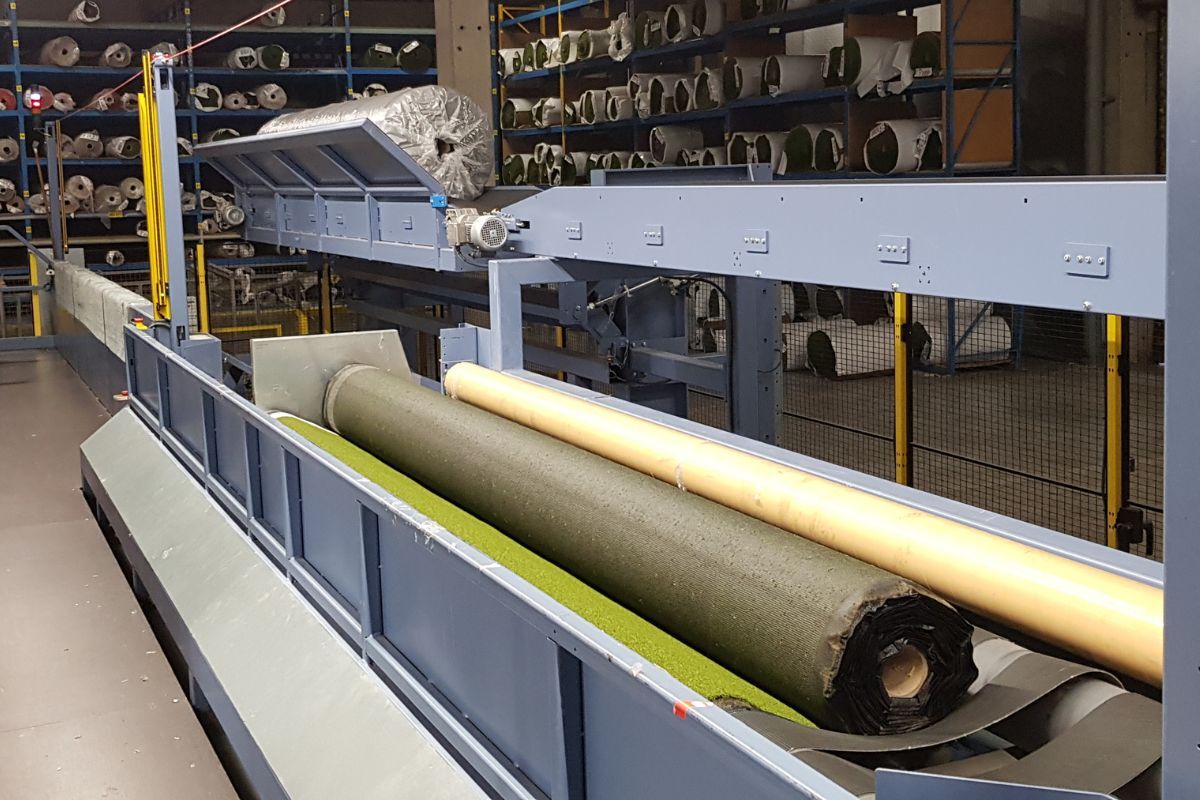
      ​Step 8 — Rolling and Packaging

      Once quality-approved, the turf is rolled onto large cardboard or steel tubes. Standard roll widths are typically 3.75m or 4m, with roll lengths ranging from 15m to 25m depending on the pile height and weight.
      Artificial turf production line rolling finished synthetic grass carpets for quality-controlled sports turf and landscaping grass applications
      © Copyright 2026 @ Decospaa International LLP. All Rights Reserved.
      Rolls are wrapped in protective film or hessian, labeled with batch information (including product code, pile height, color, and production date), and loaded for shipping.

      ​Types of Artificial Turf and Their Applications

      Type

      Key Characteristics

      Common Applications

      Landscape/Garden Turf

      Soft PE fibers, realistic appearance, varied pile heights

      Residential lawns, rooftops, balconies

      Sports Turf (Football/Soccer)

      FIFA-certified, long pile (40–60mm), infill-based

      Football stadiums, training facilities

      Hockey Turf

      Short pile (10–15mm), water-based or sand-dressed

      Field hockey pitches

      Tennis Turf

      Low pile, sand-filled, consistent ball bounce

      Tennis courts

      Padel Turf

      Short, textured fiber, silica sand infill

      Padel courts

      Decorative/Indoor Turf

      PP or PE fibers, varied colors available

      Events, retail, interior design, exhibitions

      Putting Green Turf

      Ultra-short pile, precision-engineered fiber

      Golf putting greens

      ​What Makes a High-Quality Artificial Turf?

      Not all artificial turf is created equal. Here are the key factors that separate premium products from cheaper alternatives:

      1. Fiber Quality: Premium turf uses high-grade PE resin with robust UV stabilization — ensuring the color remains vibrant and fibers remain flexible for 8–15 years of use.
      2. Dtex Rating: The dtex value measures the weight of 10,000 meters of yarn in grams. A higher dtex means thicker, more durable individual fibers. Look for dtex values of 10,000–13,000 for quality landscape turf.
      3. Stitch Density: More stitches per square meter equals a lusher, more durable surface. High-density turf better withstands heavy foot traffic without showing wear paths.
      4. Backing System: A polyurethane backing with drainage holes outperforms standard latex in terms of longevity, flexibility, and drainage — especially important in outdoor settings.
      5. Certifications: Always look for recognized certifications — FIFA Quality Pro, CE marking, SGS or Intertek test reports, RoHS compliance (restricting hazardous substances), and ISO-certified manufacturing facilities.

      ​The Environmental Perspective

      Sustainability is an increasingly important consideration in artificial turf manufacturing. Leading manufacturers are responding with:
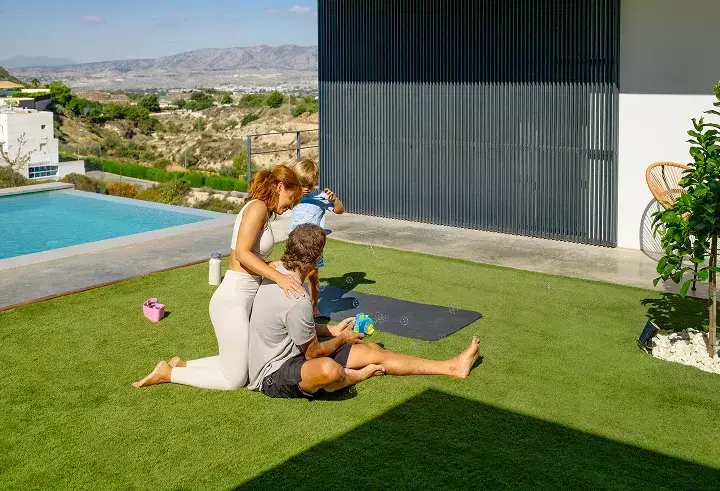
      Family relaxing on premium artificial grass lawn near pool showcasing soft, durable landscaping turf for outdoor living and leisure spaces
      © Copyright 2026 @ Decospaa International LLP. All Rights Reserved.
      Recyclable mono-material products — turf where the fiber and backing are made from the same polymer, making end-of-life recycling simpler.
      1. Bio-based fibers — PE derived from sugarcane instead of fossil fuels.
      2. Organic infill alternatives — cork, coconut husk, and olivine replacing crumb rubber.
      3. Closed-loop manufacturing — recycling production waste back into the extrusion process.

      As the industry evolves, more sustainable and fully recyclable artificial turf systems are becoming the norm rather than the exception.

      ​FAQs- Frequently Asked Questions

      What is artificial turf made of?

      Artificial turf is made of three main components: synthetic fibers (polyethylene, polypropylene, or nylon), a backing system (woven fabric coated with latex or polyurethane), and infill material such as silica sand, crumb rubber, or TPE granules. Each component plays a specific role in the performance, appearance, and durability of the final product.

      How long does artificial turf last?

      High-quality artificial turf typically lasts 8 to 15 years, depending on fiber quality, UV stabilization, usage intensity, and maintenance practices. Sports fields under heavy daily use may require replacement sooner, while low-traffic landscape installations can exceed 15 years with proper care

      What is the tufting process in artificial turf manufacturing?

      Tufting is the stage where hundreds of yarn needles simultaneously stitch synthetic fibers through a primary backing fabric. It is the process that turns individual yarn spools into a cohesive turf carpet. Key parameters — gauge, stitch rate, and pile height — are all precisely controlled during tufting to determine the final turf's density, appearance, and performance

      What is the difference between polyethylene and polypropylene artificial turf?

      Polyethylene (PE) turf is softer, more durable, and UV-resistant — making it the top choice for landscaping and sports applications. Polypropylene (PP) turf is stiffer and more economical, suited to decorative or low-traffic uses. For outdoor installations or sports fields, PE is almost always the recommended fiber.

      Is artificial turf environmentally friendly?

      Modern artificial turf is increasingly sustainable. Leading manufacturers now offer mono-material recyclable products, bio-based PE fibers derived from sugarcane, organic infill alternatives (cork, coconut husk), and closed-loop manufacturing that recycles production offcuts. While no synthetic product is entirely without environmental impact, significant progress is being made toward circular, low-carbon artificial turf systems.

      Does artificial turf get hot in the sun?

      Yes — standard artificial turf can absorb and retain heat in direct sunlight, reaching surface temperatures higher than natural grass. To mitigate this, manufacturers offer cooling infill systems (such as hydro-cooling sand or organic infill), lighter-colored fiber options, and perforated backing for better airflow. Ask your supplier about heat-reduction solutions for your specific climate.

      How is artificial turf installed?

      Artificial turf is typically installed over a compacted aggregate base layer, with a weed membrane underneath. Rolls are laid out, seamed together, and secured at the edges with nails or adhesive. Infill material is then brushed in between the fibers using a power broom to complete the surface. Professional installation is recommended for sports applications

      ​Final Thoughts

      The production of artificial turf is a sophisticated, multi-stage process combining polymer science, precision engineering, and rigorous quality assurance. Understanding this process empowers you to ask the right questions when sourcing turf — whether for a sports facility, a commercial landscape project, or your own garden.

      When evaluating artificial turf products, always ask suppliers for certified test reports, request physical samples to assess fiber quality, and ensure the product meets the performance and safety standards relevant to your application.
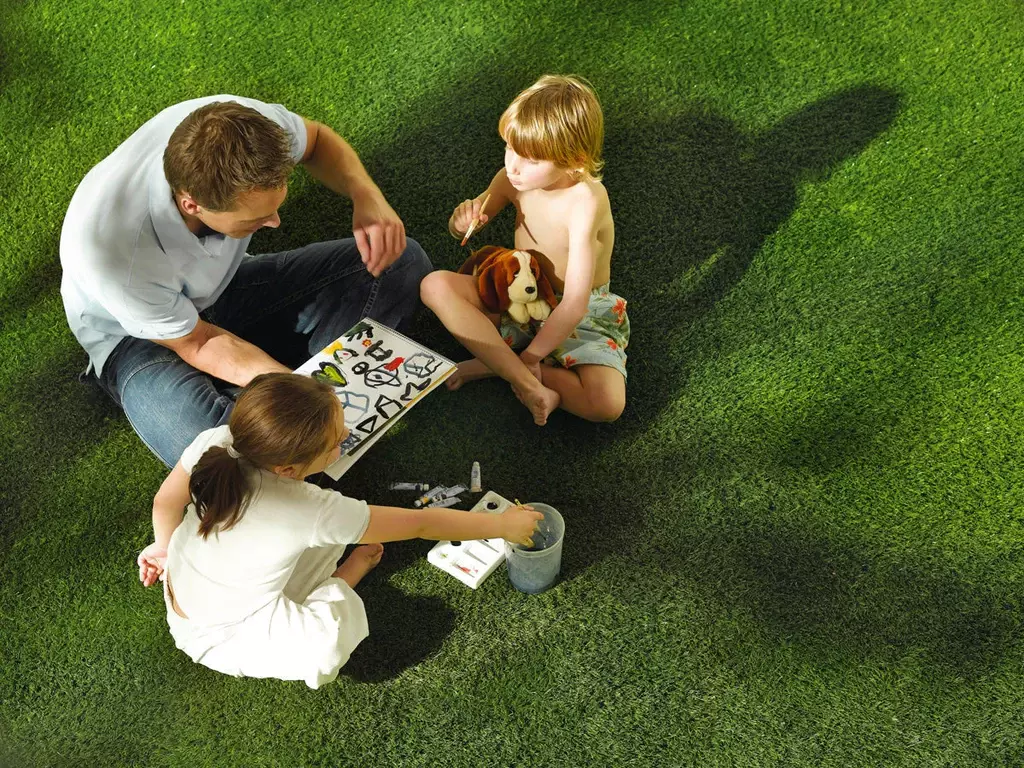
      Father and children playing on synthetic grass lawn highlighting soft, safe artificial turf surface for landscaping and family outdoor use
      © Copyright 2026 @ Decospaa International LLP. All Rights Reserved.
      Looking for high-quality artificial turf for your next project? Contact the Decospaa International team today to explore our full range of solutions tailored to sports, landscaping, padel, and commercial applications. Get in touch | Request a free sample 
      Items have been added to cart.
      One or more items could not be added to cart due to certain restrictions.
      Quantity updated
      - An error occurred. Please try again later.
      Deleted from cart
      - Can't delete this product from the cart at the moment. Please try again later.